

What do you find yourself wanting before you have words for it?
What do you keep looking for, even when it doesn’t satisfy you?
Can you feel the difference between interest and attachment?
How do you decide that something matters to you?
Have you ever realized too late what you were actually wanting?
When something feels meaningful, can you tell what made it feel that way?
When you say you want something, what are you expecting it to give you?
SaturnVox presents
Erato’s Salon
What is Erato's Salon
〰️
What is Erato's Salon 〰️
Every three months, a small group gathers for an evening structured around performance, philosophy, and conversation. The night begins with a showcase, where works are presented through reading, performance, image, or staged encounter, and you are there to witness what is placed in front of you. After the showcase, we share a meal and sit together to speak about what we saw—what held our attention, what stayed with us, and what we are still trying to understand. The conversation is part of the event itself, keeping the work open and in motion.
This structure is deliberate. The salon is organized around a shared problem: we are constantly being moved by what we see, often without noticing how that movement forms. Attention catches, something lingers, and we respond before we have time to recognize the process itself. This space slows that sequence down, giving you time to see what holds you, to hear how others experienced the same moment differently, and to remain with what does not resolve immediately.
This event is inspired by my ancestors
Ioan P. Culianu
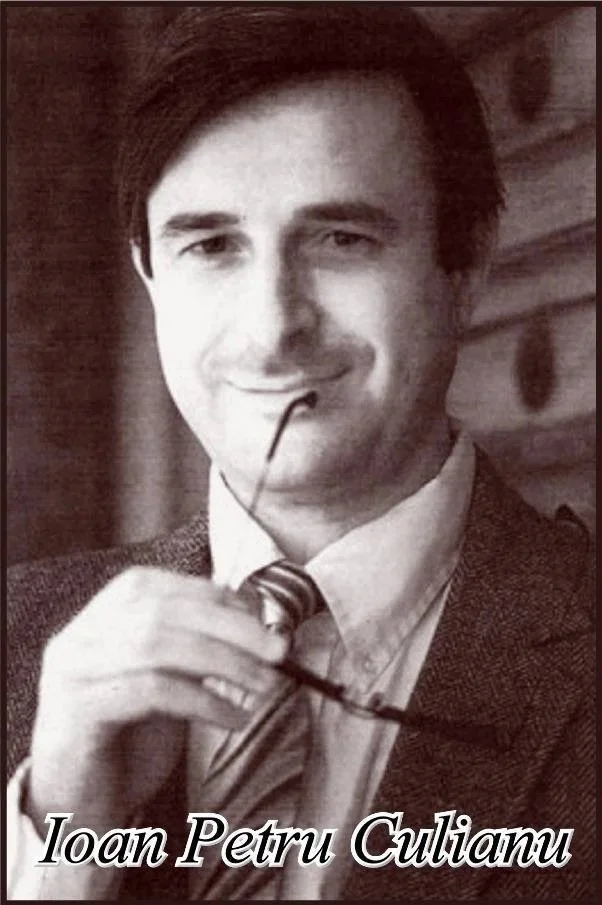
5 January 1950 – 21 May 1991

In the text Eros and Magic in the Renaissance, my ancestor argues that Renaissance magic was a way of influencing people through desire and imagination. What mattered was not brute force, but the ability to work on the mind through images strong enough to take hold. He treats this as more than a historical curiosity. For him, that older logic survives in altered form in the modern world, where the magician’s descendants are no longer court philosophers but the psychoanalyst, the advertiser, and the publicity agent. The political force of that argument lies here: when imagination is no longer treated as a serious faculty, people become easier to organize through the images that surround them. This salon begins from the belief that erotic life is one of the places where that struggle over imagination is still happening.
And the Women of the Salon Tradition
Salons functioned as semi-private spaces where perception itself was shaped. They gathered artists, thinkers, and participants not simply to present finished works, but to test, refine, and circulate ways of seeing. What happened in these rooms moved outward—into culture, politics, and social life—because they organized how people interpreted what they encountered.
This salon takes up that function within erotic life as a site where our relationship to desire and imagination can be trained.
This salon is an attempt to create different conditions. The showcase introduces images, the meal introduces language, while the group introduces relation.
These are not separate stages. They are movements of the same process.
An image is encountered. It produces a response—felt, partial, often unclear.
That response is spoken, heard, and altered in relation to others.
Through this, desire is not removed or corrected. It becomes knowable as it forms—across perception, body, and exchange.